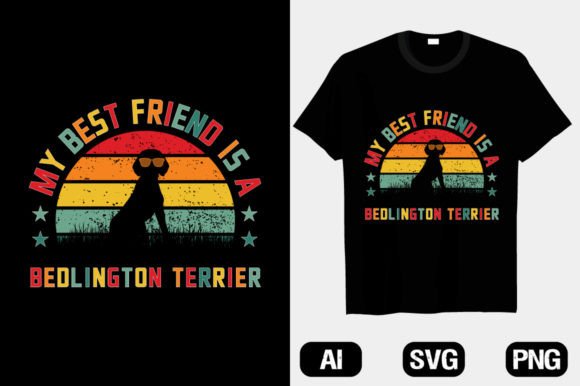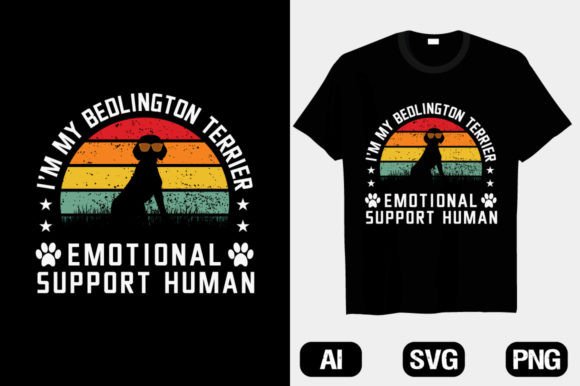
Bedlington Terrier Dog Retro T-shirt
A Designer’s First Glance: Charm with Clear Intent
The Bedlington Terrier Dog Retro T-shirt lands with a warm, confident wink—not loud, not ironic, but quietly self-assured. As an embroidery designer who’s stitched hundreds of dog-themed pieces for Etsy shops, boutique clients, and custom baby blankets, I immediately recognize what this design *isn’t*: it’s not a cluttered meme shirt or a hyper-detailed portrait meant for 10-inch hoops. It’s a clean, mid-century-inspired vector silhouette—rounded lines, subtle posture tilt, expressive eyes, and that unmistakable Bedlington crown of fur rendered in gentle negative space. It feels handmade *in spirit*, even though it’s digital. That balance makes it unusually versatile for real embroidery work.
Where It Shines: Real Projects, Real Fabric
Last week, I prepped a small-batch run of linen tote bags for a local dog rescue fundraiser. I chose the Bedlington Terrier Dog Retro T-shirt as the centerpiece—scaled to 4.2 inches wide—and stitched it on medium-weight natural linen using a light tear-away stabilizer. The result? Crisp satin-stitched outline, soft fill-stitch body, and zero puckering. Customers responded instantly: “That’s *my* dog!” “I’ve never seen a Bedlington done so sweetly.” That emotional resonance is rare—and valuable. It works just as well on a lightweight cotton sweatshirt (use cut-away stabilizer), a denim apron pocket (test stitch density first), or a 100% cotton tea towel (avoid dense fills near hems). For baby embroidery? Yes—but size it no smaller than 3 inches and avoid tight satin-stitch eyes on onesies; opt for running-stitch accents instead.
Where to Pause: Texture, Scale, and Fabric Truths
This isn’t a one-size-fits-all embroidery file. On highly textured fabrics—like bouclé sweatshirts or heavy terry cloth—the retro simplicity helps, but fine interior details (like the subtle ear contour or collar line) can blur if stitch density is too high. On stretchy fabric (think jersey tees), you’ll need excellent stabilization and possibly a slightly reduced scale—especially if stitching directly onto a curved surface like a baseball cap front. Dark fabrics demand careful thread color contrast: the original vector suggests muted olive and cream, but for embroidery, swap to high-contrast combos—navy thread on heather grey, charcoal on oatmeal, or even metallic bronze on black for boutique appeal. Tiny lettering (“Emotional Support Human”) is present in some variants—if your version includes it, test that text at 100% scale on scrap first. Anything under 1/4 inch tall risks legibility loss in fill stitch.
Design Integrity in Motion
What sets the Bedlington Terrier Dog Retro T-shirt apart from generic dog graphics is its *intentional restraint*. No gradients, no photorealism, no overworked highlights—just shape, rhythm, and breed-specific character. That translates directly to cleaner machine embroidery: fewer jump stitches, smoother satin edges, and better adaptability across hoop sizes. It reads clearly at 3 inches on a child’s pillow cover and holds presence at 6 inches on a throw blanket. For Etsy sellers, that means one design asset can serve multiple product mockups—tote bag, sweatshirt, patch—without visual fatigue. And because it leans into retro warmth rather than trend-chasing humor, it avoids dating quickly. A holiday gift embroidered this December still feels fresh next spring.
Practical Notes Every Embroiderer Should Check
- Test before committing: Run a full-size sample on scrap fabric matching your final product’s weight and stretch.
- Review stitch density: If the file includes dense fill areas (like the body), reduce density by 5–10% for lightweight or delicate fabrics.
- Hoop size matters: Confirm the largest dimension fits comfortably within your standard hoop—no last-minute resizing mid-project.
- Inspect corners and curves: Zoom in on vector paths—look for unnecessary anchor points that could cause stitch hesitation or tiny jumps.
- Mock it in context: Drop the design into black-and-white printable mockups first. Does the silhouette hold? Does negative space breathe?
- Stabilizer strategy: Light to medium cut-away for knits; tear-away for stable wovens; fusible + tear-away for nap-free texture control.
- Licensing clarity: Since this lives in the T-Shirt Designs category and is labeled Graphics, verify whether commercial use (e.g., selling finished embroidered patches or wholesale apparel) is permitted—don’t assume.
Beyond the Stitch: What This Design Delivers Commercially
For craft business owners and Etsy sellers, the Bedlington Terrier Dog Retro T-shirt isn’t just another graphic—it’s a quiet trust-builder. Its specificity (Bedlington, not “generic terrier”) attracts a niche audience ready to invest in quality. When stitched cleanly on a premium canvas tote or organic cotton tee, it signals care—not just in execution, but in curation. Customers notice. They photograph it. They tag your shop. That kind of organic engagement is gold for small shops without big ad budgets. It also layers beautifully: pair it with minimalist typography (“Est. 2023”) or a single botanical stem for nursery decor, or reverse it in tone for a subtle iron-on patch on a denim jacket. Its retro personality doesn’t shout—it invites conversation. And in handmade markets, that invitation is everything.
Final Thought: A Design That Respects the Craft
I’ve passed on dozens of “cute dog” embroidery files because they look great on screen but fray, bleed, or vanish when stitched. The Bedlington Terrier Dog Retro T-shirt respects the reality of thread, tension, and texture. It’s designed *for* translation—not just display. Whether you’re embroidering a one-of-a-kind personalized gift, building a cohesive line of dog-lover merchandise, or sourcing reliable digital embroidery files for your craft business, this design earns its place in your working library. Just remember: know your fabric, honor your stabilizer, and always—always—stitch a test first. The rest, as they say, is pure Bedlington charm.